Find Your Fit
Written by: Solveig Corbin, CSYT, Owner/Director of Nokomis Yoga.
At our independent, community oriented yoga studio in Minneapolis, we offer a variety of different yoga styles.
Discovering what style of yoga resonates with your body, mind and spirit is essential to improving your health, vitality and well-being.
There are so many different styles of yoga! While Vinyasa yoga tends to be what we see on television or in the movies, there are at least 20 or more yoga styles currently being taught in the US.
For the most part, all styles of yoga have as their main focus tuning into the breath, the body and inner body, turning our focus from external to internal to experience the oneness (union with our true nature); that space within where all is one. However, yoga poses are just one limb of this 8-limb yoga path the India sages imbibed and taught beginning over 2,000 years ago.
Most of the physical poses that we are familiar with have been developed in the last 100 years or so.
In the west, the tendency is to focus on the physical aspect of yoga, namely poses. While you may have momentary experiences of union with all things, from the physical practice of yoga, one needs to devote oneself to all of the limbs of yoga to become enlightened like the yogic sages. But I digress, as this is probably a topic for another blog.
There are so many physical and mental benefits to the physical practice of yoga! However, each style of yoga does not have the same emphasis or even all of the same benefits. While one style, may focus more on releasing tensions in the body, another style may focus more on building strength. One style may be more focused on relaxation, stress relief and meditation, another style may be more focused on meditation in movement. In other words, there’s different strokes for different folks.
The main thing to know, is that yoga should feel good! If it doesn’t, try a different style.
Where to start?
Thinking about your goals for yoga and what your body and nervous system really need is a good place to start.
If your goal is to become stronger and more flexible and you are a person who loves to move, and movement feels good to your body and nervous system, then a more active class like Vinyasa or Ashtanga would probably be a good fit. In these classes you move from pose to pose in a flow with your breath. The effect is both calming and enlivening.
These classes can be physically somewhat demanding with Ashtanga being more physically rigorous than Vinyasa. In Ashtanga you are doing a set sequence of poses that are the same each time, until you graduate to the next set. In Vinyasa, there’s different sequencing each time, maybe preparing for a peak pose, or focusing on a specific area of the body in the sequencing.
Ashtanga was developed by Sri K Pattabhi Jois in the 1940s under the tutelage of the father of modern yoga: T Krishnamacharya who developed the practice of weaving together the breath with physical movement. Modern Vinyasa came out of this Ashtanga practice as a more creative, free-flowing process that doesn’t follow strict sequencing. We offer both Ashtanga and Vinyasa at Nokomis Yoga.
Slower Yoga
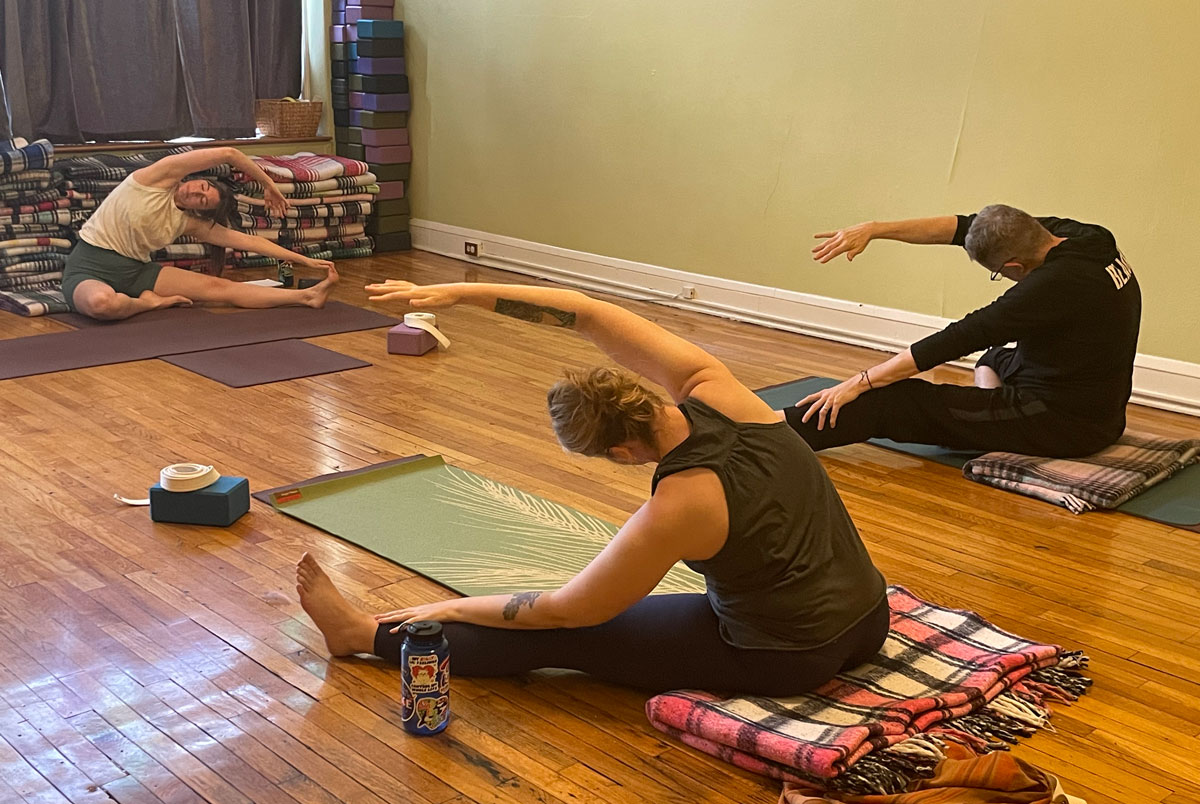
In the beginning, thousands of years ago, yoga was strictly about quieting the mind in order to go beyond the mind to the state of pure consciousness. Thus seated poses, such as lotus pose, Virasana, Svastikasana and others were the poses of these times. Joint openers and seated stretches were added to keep the body healthy and to help people become more flexible to prepare the body to sit in meditation. Ultimately, more poses such as standing poses for strength and balance have become a part of most of the slower yoga practices. Slower yoga is a practice of slowing down and cultivating inner stillness. If you have an over-active mind and want to feel calmer and less anxious, slower yoga will help.
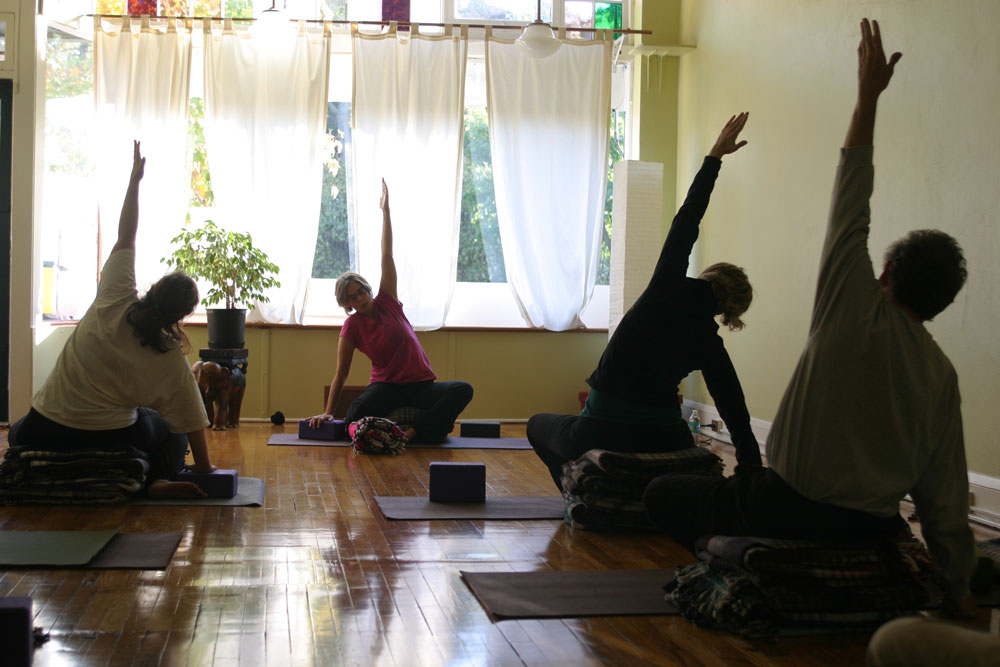
Slower yoga can be more accessible to beginners who want to learn poses one at a time at a slower pace. Perhaps you have unresolved pain or deep-seated tension in your body that makes you feel stiff or sore, and movement doesn’t always feel good in some parts of your body. Or maybe you’re simply someone who likes to take things slow and absorb them one at a time. Perhaps you would like to learn how to relax and slow down enough to be able to sit and meditate. Slower yoga gives you the time, space, and tools to learn how to slow down, listen to your body, and be more present in your body.
What styles of yoga are slower? At Nokomis Yoga we offer:
Hatha Yoga
- Do Yoga Like a Retiree
- Gentle Yoga
- Yoga Basics
- Yoga for Seniors
And even slower more restorative yoga:
- Svaroopa® yoga
- Yin Yang yoga
Hatha Yoga is the oldest style of yoga with a few traditional yoga poses from India from over 2,000 years ago (and a lot of newer ones). Most poses are done sitting, standing or on hands and knees and are accessible to most people.
All of our Hatha classes are beneficial for aging. Hatha yoga helps you to re-gain flexibility, strength, balance and cardiovascular health. And it just feels good to do Hatha yoga at any age! People of all ages practice Hatha yoga.
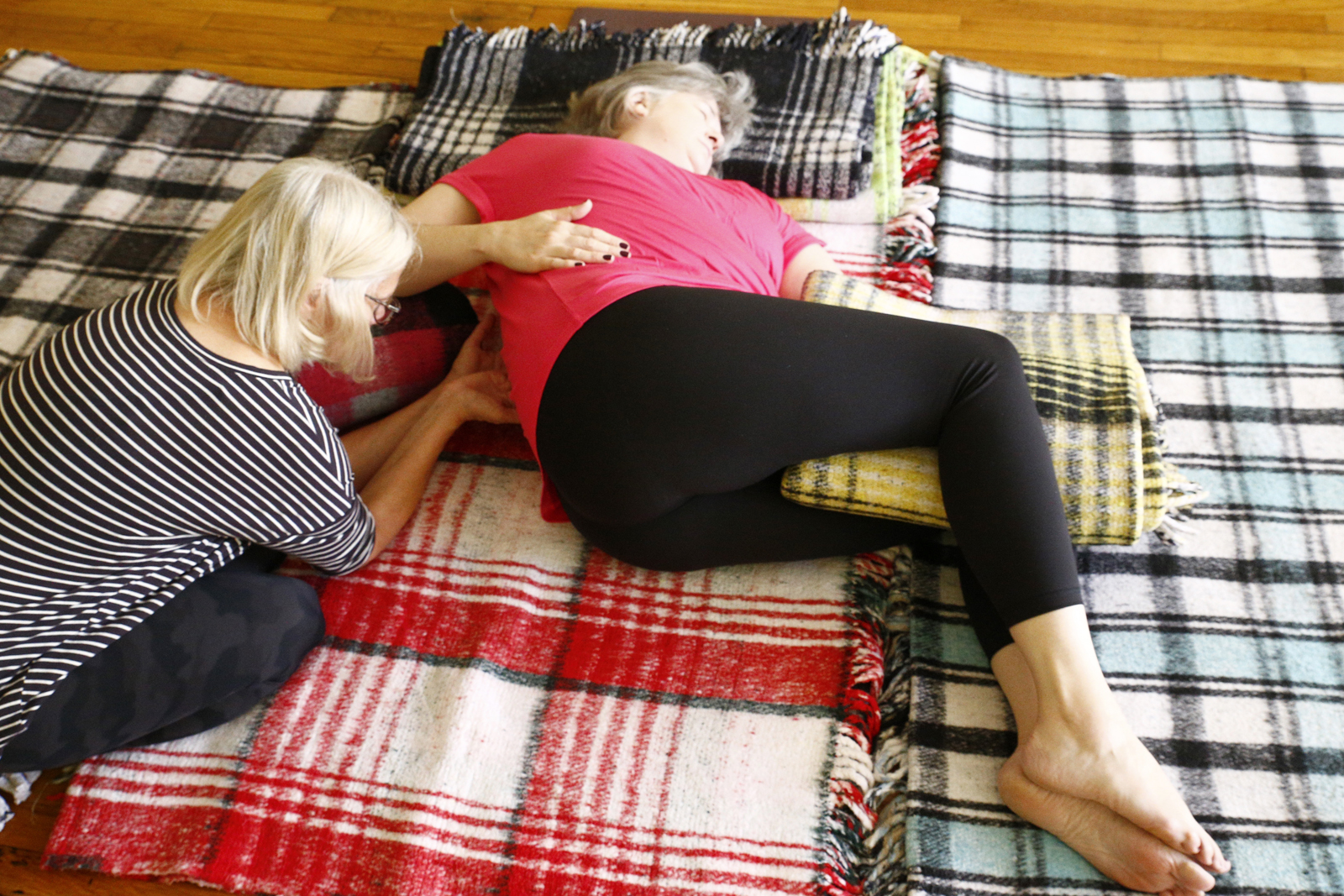
Svaroopa® Yoga is a relatively newer style of yoga which was developed by Swami Nirmalananda Saraswati in the 1970s. The poses are designed to reach into the tightest areas of your spine, to re-align your spine and dissolve the deepest layers of physical tension. Calmness and bliss emerge as you sink deeper within and move out the blockages in your spine and in your system. Poses are done using a lot of props to support your body in different ways to get the opening in your spine and attunement to deeper levels of consciousness.
Yin Yoga is also a more modern style of yoga developed in the 1970s by Taoist, Paulie Zink. Paul Grilley studied under Zink and combined the floor poses with the Chinese merdian systems, naming the practice Yin yoga. Yin yoga also incorporates Buddhist mindfulness practices. Yin yoga is done lying on the floor much of the time. You are asked to move your limbs and/or your body in certain ways and then you hold the posture for several minutes before slowly moving to the next one. This type of yoga helps to release the fascia (fascia is connective tissue that wraps around all your muscles and body parts.) When you are stressed, your fascia tightens (just like your muscles do). It can feel like muscle tension. Releasing your fascia feels wonderful! At Nokomis Yoga, we offer Yin Yang yoga which is a blending of Soma Yoga (neuro-muscular re-training to release deep holding patterns of tension), gentle Hatha (to move energy and build strength) and Yin (to stretch and restore connective tissue.